The curtain style you choose affects how the fabric hangs, how easily it opens and whether it works with your existing pole or track. The lining can also influence light levels, privacy and insulation. In the UK, popular styles include eyelet, pencil pleat, pinch pleat, wave, voile, blackout and thermal curtains. Google Trends shows a continued search interest in several of these styles, while retailers offer them across ready-made and made-to-measure ranges [1].
Retailers such as Swift Direct Blinds, John Lewis and Dunelm are helpful places to start comparing different headings, fabrics and lining options before deciding what works best for your window.
'Eyelet', 'pencil pleat', 'pinch pleat' and 'wave' describe how a curtain hangs. 'Voile' refers to a lightweight sheer fabric, while 'blackout' and 'thermal' describe how the curtain performs.
1. Eyelet Curtains
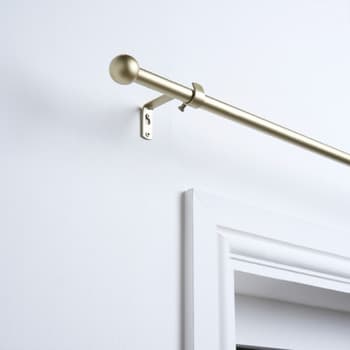
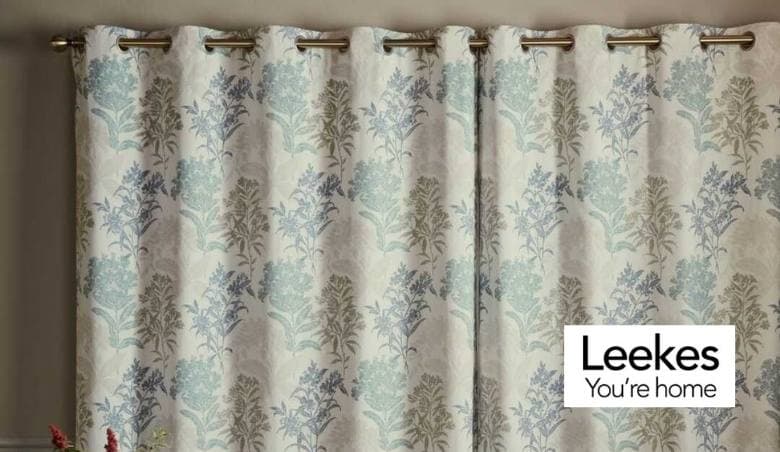
Eyelet curtains are a straightforward option if you already have a curtain pole. Metal rings are fitted into the top of the fabric, allowing the pole to pass directly through them. This creates broad folds without the need for hooks or separate curtain rings. Eyelets are designed for poles rather than standard tracks. You should check that the pole fits through the rings and can support the weight of the material. John Lewis states that its eyelets have a diameter of 40mm, although measurements can differ between retailers [2].
This style remains a favourite because it is easy to hang and widely available in ready-made and made-to-measure ranges. Dunelm identifies eyelet and pencil pleat as two of the most popular headings within its curtain collection [3]. The curtains move directly along the pole, but the fitting remains visible. Its colour and finish will therefore form part of the overall appearance.
2. Pencil Pleat Curtains
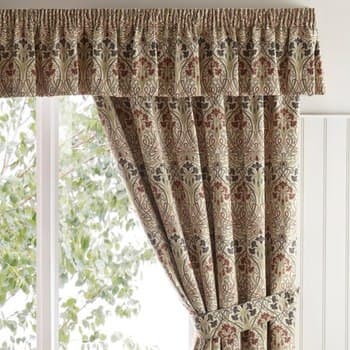
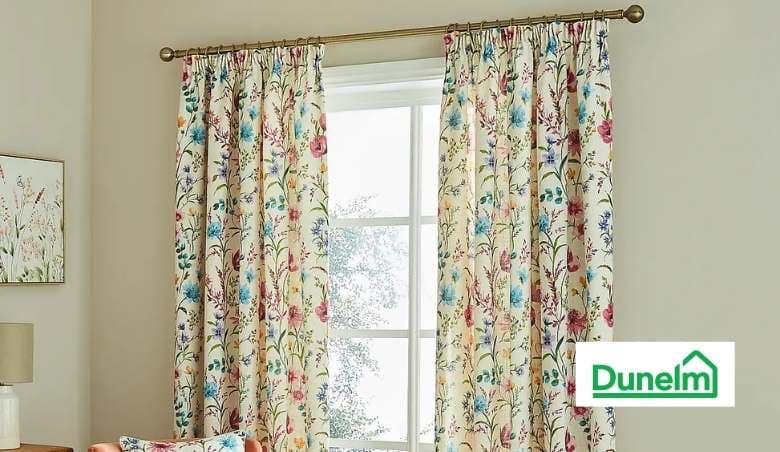
Pencil-pleat curtains are a flexible choice because they can usually hang from either a pole or a track. Cords within the heading tape gather the material into narrow folds. Hooks are then placed into the tape and attached to track gliders or rings. You can adjust the width by pulling the cords until the curtain fits the space.
The cords should be tied rather than cut in case the heading needs to be loosened later. Their compatibility with different fittings helps explain why pencil pleat curtains remain a common choice. They are widely available in ready-made collections, although made-to-measure options are also produced.
3. Pinch Pleat Curtains
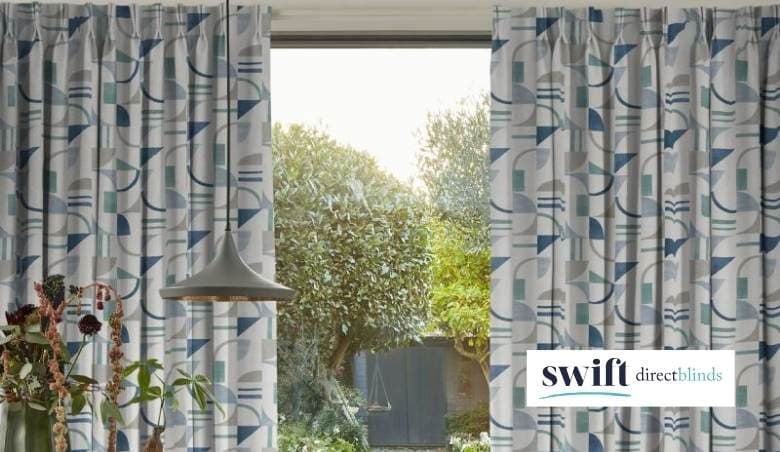
Pinch pleat curtains create fixed, evenly spaced folds across the top of the fabric. The pleats are sewn into position during production rather than gathered with cords. Double and triple pinch pleats are common, with each option creating a slightly different shape. They can usually hang from a pole with rings or a track. John Lewis explains that its made-to-measure pinch pleat curtains arrive at the ordered width with hooks already fitted [2].
Pinch pleats are often chosen because the sewn folds create a consistent heading that does not need to be adjusted during fitting. However, accurate measurements matter because the width cannot be changed in the same way as a pencil pleat curtain. The amount of fabric required will depend on the material and number of folds. Always follow the measuring instructions supplied with the product.
4. Wave Curtains
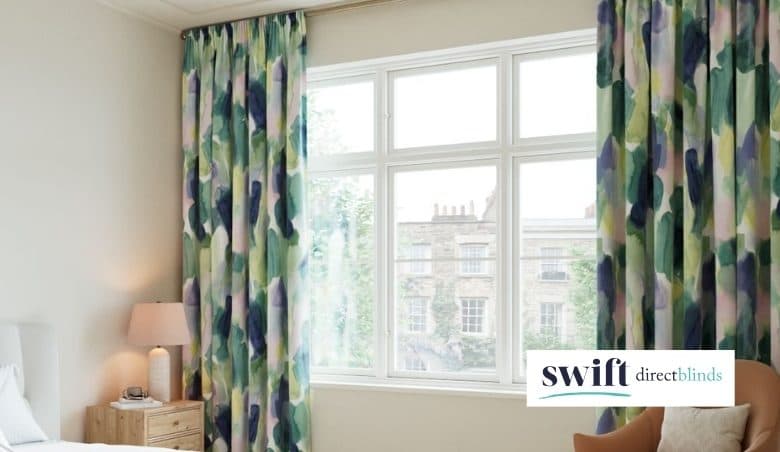
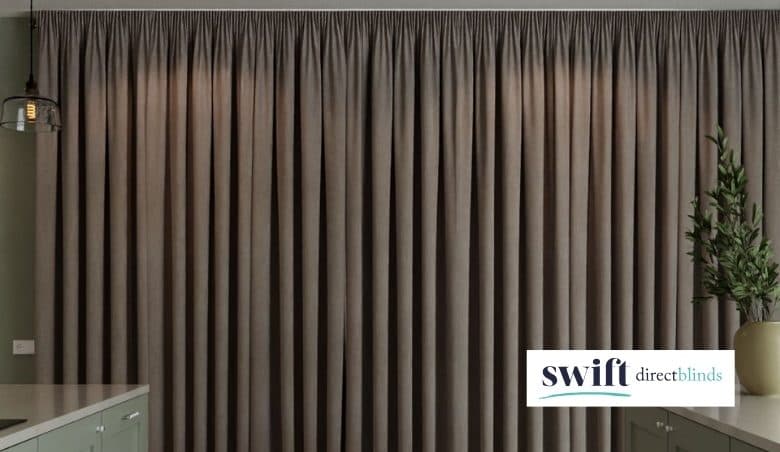
Wave curtains create smooth, evenly spaced folds from the top to the bottom of the fabric. They attach to a specialist track with gliders positioned at fixed distances. This keeps the folds consistent while the curtains are opened and closed. A standard pole or track will not normally be suitable. Hillarys states that its wave curtains require a dedicated track system [4].
Wave headings have become a recognised made-to-measure option because they create uniform folds and can stack back neatly when open. They can work particularly well across wide windows and glazed doors. Swift Direct Blinds includes wave curtains within its made-to-measure range. Ordering the curtains and compatible track together can help ensure that the fabric and fitting system work correctly.
5. Voile Curtains
Voile curtains allow daylight into the room while adding a light covering across the window. The sheer material can be used alone or layered behind thicker curtains. This gives you more control over light and privacy during the day. Voiles remain popular because they help rooms feel bright while providing some daytime screening. However, they do not usually offer full privacy after dark. Better Homes & Gardens found that sheer materials remained visible through and recommended pairing them with a more opaque covering when greater privacy is needed [5].
Katherine Brown Curtains and Blinds has also reported increased interest in layering sheer curtains with heavier designs [6]. This allows you to keep natural light during the day before closing the main curtains at night. Voiles are available with several headings, including eyelet, pencil pleat and slot top. Check whether the product is designed for a pole, track or tension rod before ordering.

6. Blackout and Thermal Curtains
Blackout curtains reduce the amount of light entering a room, while thermal curtains are designed to limit heat transfer around the window. These are performance features rather than headings. A blackout or thermal design can still use eyelet, pencil pleat, pinch pleat or wave fittings. Their popularity is linked to the benefits they provide. Blackout curtains are often chosen for bedrooms, nurseries and rooms affected by streetlights. Thermal options may help around cold or draughty windows.
Some products combine both functions through a blackout thermal lining. This may help darken a room while adding another layer between the window and living space. However, even blackout fabric may allow some light to enter around the edges. A wider fit that extends beyond the window may provide better coverage. The effectiveness of thermal curtains will also depend on the material, fit and condition of the window.
Which curtain style should you choose?
Start with the fitting you already have. Eyelet curtains need a pole. Pencil pleat and pinch pleat can normally work with a pole or track, while wave curtains require a compatible track. Next, think about the room. Blackout lining may be useful where darkness and privacy matter, like in your bedroom or living room. Voiles are better suited to spaces where you want to keep natural light, while thermal lining can add another layer of heat around colder windows.
You should also decide between ready-made and made-to-measure curtains. Eyelet and pencil pleat designs are widely available in standard sizes, while pinch pleat and wave options are more often made to fit individual windows. Across the market, many retailers offer a choice of headings, fabrics and linings. Before ordering, always follow the retailer’s measuring guidance, as each heading requires a different amount of fabric to create the correct folds.
For more style inspiration to help create your perfect home, follow us on Instagram and Pinterest. You can also search for curtains and furnishings from retailers across the market on uFurnish.com.